
The Rauhnächte — also called the Twelve Nights or Yule Nights — are the twelve sacred nights between December 24 (Christmas Eve) and January 6 (Epiphany / Three Kings Day) in the folk traditions of Germany, Austria and Switzerland (the DACH region). In some traditions they begin at the winter solstice (December 21). Across Central Europe they are understood as a threshold time, when the door between the worlds is especially thin. Dreams are considered prophetic. Spirit perception intensifies. Smoke (Räucherwerk) is traditionally used. The tradition is centuries old and layered — pre-Christian, Christian, regionally distinct. What you find here is my view after thirty years of shamanic practice — and I'll say it up front: my own Rauhnächte practice comes from the West African wolf shamanism lineage of the Ivory Coast, NOT from Germanic-Celtic tradition. That clarification matters.
I'm Dr. Mark Hosak. I earned my PhD at the University of Heidelberg on Buddhist healing rituals, spent three years doing fieldwork in the temples of Kyoto, practiced on Mount Koyasan (Shingon) and Mount Hieizan (Tendai), walked the Shikoku 88-temple pilgrimage on foot, and in the following decades met spiritual teachers across Japan, Korea and Southeast Asia. Threshold times — full moon, moon phases, Rauhnächte — have been a central focus of my practice and research for over twenty years. What follows is a comparative view: DACH cultural history as the context, my own West African lineage as lived practice.
What Are the Rauhnächte? — A First Orientation for English Readers
If you've never heard of the Rauhnächte before, here is the short story.
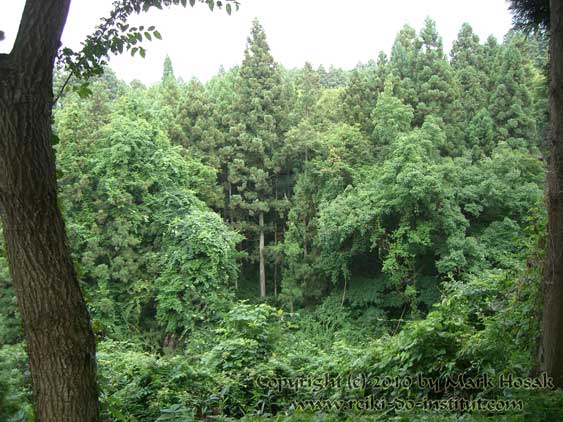
In the German-speaking part of Europe — Germany, Austria, Switzerland, parts of South Tyrol — the twelve nights between Christmas and Epiphany are not just a holiday season. They are a liminal period: a stretch of time understood by folk tradition to be different from the rest of the year. The winter solstice has just passed. The days are at their shortest. Light is at its weakest. Cold sits deep. And for centuries the people of these lands have treated this period as sacred.
The name Rauhnächte probably comes from Rauch — German for "smoke." Throughout these nights, farms, houses, stables and thresholds were smoked with juniper, sage, frankincense and other herbs. It cleansed. It protected. It marked the time as different from ordinary time.
English-speaking readers sometimes know these nights as the "Twelve Nights of Christmas" (the same span that gave us the carol). In the DACH folk tradition they are deeper than the song suggests: a perception-school of dreams, signs, dream-months, smoke, silence, and the careful handling of a threshold that the old people considered very real.
Why Twelve Nights? — The Cultural-Historical Layers
The Rauhnächte sit on several historical layers. Read with care, you can see them all.
Pre-Christian layer. The old Central European world knew the winter solstice period as a sacred threshold. The nights around December 21 were the days when the sun stood still — a passage between the old and new sun-year. In this phase ancestors and nature spirits were considered closer than at other times. These roots are older than Christianity.
Christian layer. With the Christianization of Central Europe, the threshold time was anchored to Christian festivals — Christmas (December 24/25) as the start, Epiphany / Three Kings (January 6) as the close. The middle of the twelve nights falls on New Year's Eve and New Year's Day — its own threshold point between the years. What had been pre-Christian remained — newly framed.
Folk-tradition layer. Over centuries a rich treasure of customs developed across the DACH regions — smoke rituals, oracle practices, prohibitions (no laundry hung out, no sweeping of the house), animal-protection rituals, lead-pouring divination, star-reading. These folk customs vary widely by region. What's done in the Black Forest is different from what's done in the Salzburg region, and different again in the Swiss Valais.
The Wild Hunt narrative. In Germanic-Celtic tradition there is the story of the Wilde Jagd — a host of ghost riders led by Wotan / Odin (in northern variants) or by Frau Holle (also Perchta, Holda) in other tellings, sweeping through the storms of the threshold nights. The Wild Hunt takes whatever is not respectfully placed or hung. That is DACH cultural history, a rich symbolic language for the threshold time.
My own Rauhnächte practice does not come from this Germanic-Celtic tradition. My wolf shamanism is West African — from the Ivory Coast, through Baron Samedi. What follows is a comparative view: DACH cultural history as valuable context, my own practice from the West African lineage as lived reality.
Mark's Rauhnächte Practice from the Wolf Shamanism Lineage of the Ivory Coast
My wolf shamanism does not come from Germany. Not from Germanic-Celtic tradition. Also not from the North American Algonquian tradition that gave the world the popular "wolf moon" story. My wolf shamanism comes from West Africa — specifically the Ivory Coast. The lineage runs through Baron Samedi. The full clarification stands on the page /en/wolf-shamanism and on /en/voodoo.

This clarification matters for the Rauhnächte too. What follows is my shamanic view of the twelve nights. It is not Germanic reconstruction. It is the view of a West-African-trained shaman on a Central European threshold time.
The time between winter solstice and Epiphany is globally — not only in Europe — a threshold time. The sun reaches its low point. Light is weakest. In many cultures this is the phase experienced as the thinning of the veil — in West Africa no less than in Central Europe, in Japan through Ōmisoka and Hatsumōde, in China around the lunar new year.
In my daily practice with Baron Samedi and the Great Wolf, the work intensifies in these twelve nights. Protection rituals run daily — not only on threshold days. The threshold beings I work with are especially reachable in this time. Anyone walking my lineage (through the Wolf Shaman Path) often has unusually intensive practice in the Rauhnächte — ancestor work, protection-strengthening, threshold-perception.
What my West African lineage contributes to the Rauhnächte is not a second Wild Hunt. It is a concrete protection and threshold practice that runs parallel to the DACH tradition — both honoring the same time with different tools. Those rooted in other traditions can shape analogous practices from their own.
The Twelve Nights — A Practical Overview
In DACH folk tradition each of the twelve nights carries its own character. The following overview is a synthesis of several regional traditions, not a single authentic lineage. Practitioners of a specific regional tradition know their own details.
The most common dating:
- Night 1 (Dec 24 → 25) · Holy Night. The start of the threshold. Family time, silence, the first dreams of the cycle. The dreams of this night, in folk tradition, point to January of the coming year.
- Night 2 (Dec 25 → 26) · Christmas Day. Dreams point to February.
- Night 3 (Dec 26 → 27) · St. Stephen's Day. Dreams point to March. Traditionally a quieter night as the holiday's social activity recedes.
- Nights 4 through 11 · the middle nights. The dreams of these eight nights correspond to April through November. This is an old symbolic language — not weather forecasting.
- New Year's Eve / New Year's Day (Dec 31 → Jan 1) · the middle. The middle of the twelve nights. Here the old year ends and the new begins. A threshold point of particular density.
- Night 12 (Jan 5 → 6) · Epiphany / Three Kings. The close of the cycle. In Catholic tradition the last smoking of the houses often happens here. The threshold closes. What was dreamt moves into watchfulness for the year ahead.
What the individual nights can mean in practice:
- Note your dreams, even if they seem chaotic
- Hold the threshold time respectfully — no big quarrels, no forced decisions
- Smoke the house daily if it fits your practice
- Hold silent times — not every family dinner needs to be loud
- Notice what you perceive, without interpreting — interpretation can come later
Smoke Practice (Räucherwerk) in the Rauhnächte
Smoke practice is one of the central practices of the Rauhnächte. The name itself — Rauhnächte, literally "smoke-nights" — points to it.

Classic herbs in Central European tradition: sage, juniper, mugwort, angelica, frankincense, myrrh, mastic, sandalwood, angelica root. The mix varies regionally — Black Forest, Salzburg, Valais — each has its own.
On the chemical level: smoke contains essential oils with measurable antibacterial and antiviral action — a real component that mattered in the hygienically marginal Middle Ages. This is not esoteric. It is the food and room hygiene of our ancestors with the tools they had.
On the energetic-shamanic level: smoke perceptibly changes the atmosphere of a space. Across all shamanic traditions worldwide, smoke is used as cleansing and protection — from the Yamabushi of Japan with aloeswood (Jinkō) and sandalwood, to the Lakota with white sage, to the West African Vodou lineage with its own smoke mixtures for calling Baron Samedi and other Loa.
How to smoke the house practically: fireproof bowl, charcoal disc (available from any spiritual supply shop), place the herbs on the glowing coal. Walk through the rooms with the rising smoke. Speak silently or aloud what you wish to clear or protect. Smoke the doorways, the corners, the windows. Open a window afterwards briefly to let the smoke move.
Note: smoke is a spiritual practice with long tradition. Anyone seriously ill belongs in qualified medical care. Smoke supports the atmosphere of a house — it is not medical treatment.
Protection in the Rauhnächte
Anyone taking the Rauhnächte seriously also tends to protection. In the threshold time more can come through than at ordinary times — good perceptions, but also burdensome ones.
Classic DACH protection customs: scattering salt at thresholds, smoke, holy water (in Catholic regions), no laundry hung out (the Wild Hunt story), no sweeping of houses, listening to animals on Holy Night (the old tale that animals speak that night). Some of these have practical roots, some symbolic. Both are part of the cultural inheritance.
My wolf-shaman protection practice from the Ivory Coast: daily calling of Baron Samedi and the Great Wolf. This practice builds from living relationship, not from the practitioner's will alone. If the lineage is not accessible to you — which is the case for most readers — you can carry the principle into your own tradition. Identify a spiritual protective power you stand in real relationship with, and ask for protection. It might be a deceased grandfather. A protective being of your tradition. A familiar spiritual presence. The form is secondary. The relationship is primary.
What highly sensitive people should keep in mind in the Rauhnächte: this time can become especially intense (see High Sensitivity page). Plan retreat time deliberately. Keep social load manageable. Sleep enough. Pay attention to dreams — they often carry information.
Rauhnächte and the Moon Phases
Each year the Rauhnächte fall into different moon phases. Some years carry a full moon, some a new moon, some both. Working with the lunar cycle you'll notice how the moon phase colors the threshold time.

- When the Rauhnächte contain a full moon: full-moon practice and threshold practice amplify each other. Threshold perception is especially intense. Protection practice especially important.
- When they contain a new moon: the introspective phase of the lunar cycle falls into the threshold time. Dreams often become especially clear. Silent practice runs deep.
- When they contain both: a particularly dense season. The threshold motion swings between expansion and withdrawal.
Fuller treatment on the Full Moon page and Moon Phases page. The aura becomes especially permeable in this time — see /en/aura.
Comparison · Japanese Threshold Tradition
What the Rauhnächte are in Central Europe, Japan has in its own form. From my years of fieldwork in Kyoto, the parallels are unmistakable.
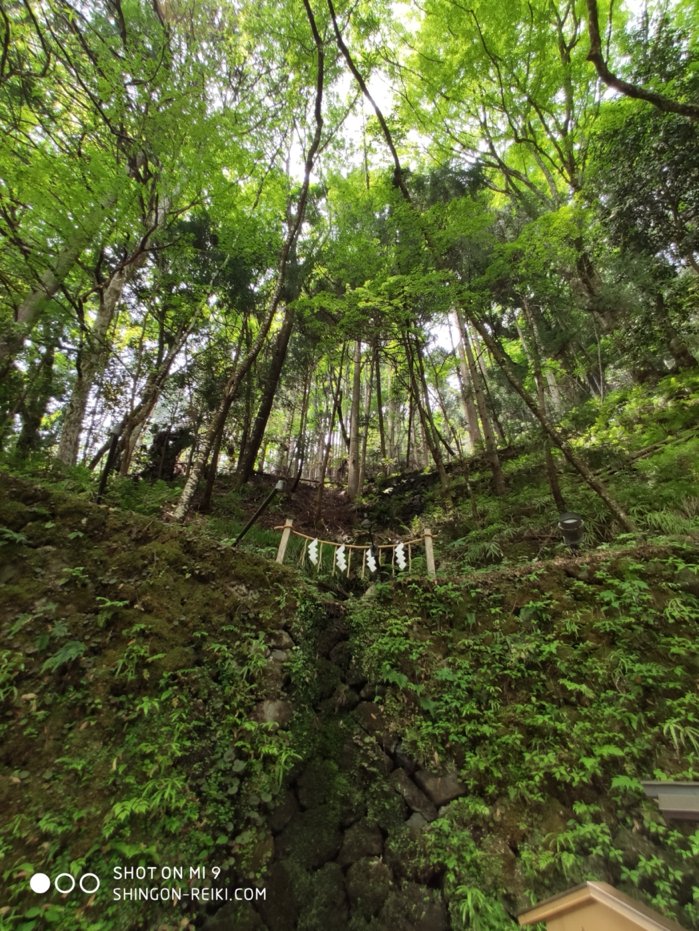
Oshōgatsu (お正月) is the Japanese New Year — not a single day but a multi-day threshold time between old and new year. The Japanese folk tradition has its own customs for this time: house-cleaning before the transition, special foods (osechi-ryōri), family visits, welcome of Toshigami — the year-kami who enters the home at New Year and blesses the year. This tradition goes back to the shamanic layers of Shintō.
Hatsumōde (初詣) is the first temple or shrine visit of the new year — a central threshold practice. Japanese families travel in the early days of January to a Shinto shrine or Buddhist temple to bless the year and ask for protection. I've experienced this in Kyoto many times — millions on the move, a particular threshold atmosphere unlike the twelve-night stillness of the DACH tradition, but carrying the same threshold meaning.
Setsubun (節分) is the second great threshold in Japan, around February 3 — the old calendar's passage from winter to spring. Soybeans are thrown to expel demons (Oni) and call in fortune (Fuku). Another threshold practice with cleansing and protective function.
What unites them: the threshold time around the year's turning is sacred across cultures — when met with respect.
Spirit Perception in the Rauhnächte
All threshold traditions agree: in this time the veil is thin. In practice:
Stronger atmosphere-reading. Rooms feel different. What usually hums in the background comes forward. Highly sensitive people know this already; in the Rauhnächte it densifies.
Dreams grow louder. More symbolic load, more meetings with deceased family or spiritual presences, more seemingly prophetic images. What you take seriously is your call. Writing them down is always right.
Synchronicities accumulate. Coincidences that aren't. Meetings that fit exactly now. This is the threshold time when the layer of spiritual relational reality shines through.
What you do as a practitioner: observe without interpreting. Smoke without forcing. Build protection without tipping into fear. If fear starts to take over, reduce practice and seek qualified guidance. Threshold perception without tools can overwhelm.
Practice Entries
If you've come this far and the Rauhnächte interest you as a real threshold time, there are three entries — from easy access to the full path.
First Step · Podcast and Newsletter
The simplest entry. In the dark weeks of the year I publish episodes on the Shamanic Worlds Podcast that lead into threshold perception. Step by step you can meet what helped highly sensitive people in the old traditions — smoke practice, protection tools, threshold perception, the high-sensitivity perception test on /en/highly-sensitive as a reflective entry.
Community · Japanese Grimoire Society
For English-speaking readers seeking community, threshold practice in groups, and ongoing perception work, the Japanese Grimoire Society on Skool is the primary home. Threshold themes — Rauhnächte, full moon, ancestor work — are part of the year's rhythm there.
Japanese Grimoire Society on Skool
Deeper Path · The Wolf Shaman Path
For those who wish to take on the lineage themselves — wolf shamanism of the Ivory Coast through Baron Samedi, with year-round threshold practice (Rauhnächte, full moon, moon phases, protection, ancestor work) — the entry is the Wolf Shaman Path. The full path: daily practice, initiation experiences, lineage guidance, community. The VIP tier includes 1:1 sessions. Not a beginner entry.
Japanese Grimoire Society — Threshold Practice in Community
For English-speaking readers: the community space where the year's threshold times — including the Rauhnächte — are met together. Step in.
Join the Society The Wolf Shaman Path