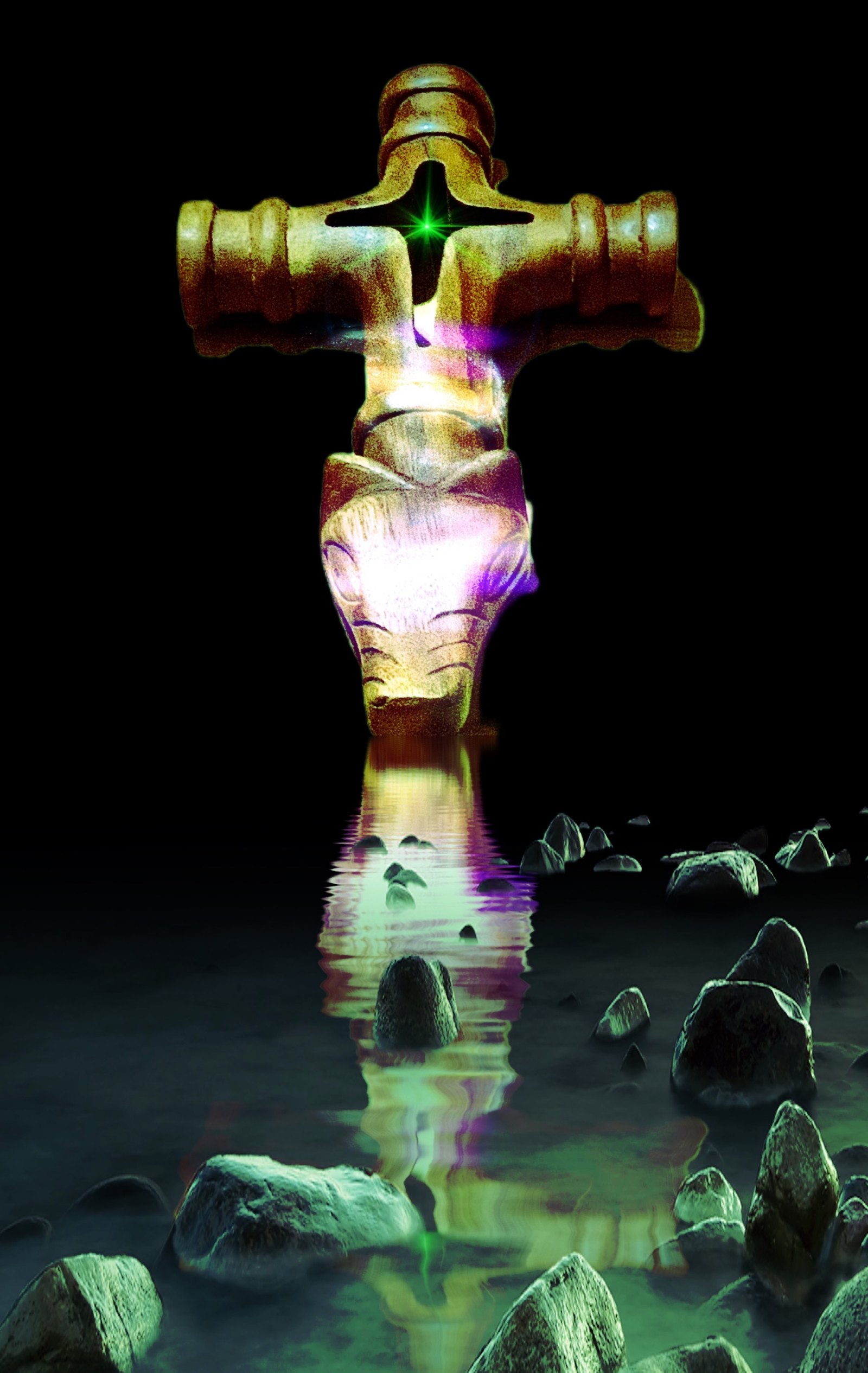
Wolf Warrior Initiation ·
Pack, Territory, Stillness
The wolf is humanity's oldest warrior image. Not because he fights — but because he knows when not to fight.
Long before humans cast fighting techniques into systems, long before a ninja or samurai swam on the river of his tradition, the image of the wolf warrior was already there. In Siberian, North Asian, European and Indigenous American cultures, the same figure recurs: a human who has let himself be led by the wolf. Not because the wolf is a particularly wild animal — but because he can do something most humans cannot. (For anyone who came to wolf imagery through video games or anime — Princess Mononoke's San, Geralt of Rivia's hunt, Ghost in A Game of Thrones — the archetype is already familiar; this article shows the source layer beneath the entertainment.)
This article is a spoke from the hub on the spiritual warrior in shamanism. Here we look at the specifically wolfish path — what stands at the centre at Shamanic Worlds and what the Master Path is built on.
Why the wolf in particular
In pop culture the wolf is often misread. He is called predator, lone, dangerous. None of these three images is fully true. The wolf is the most socially intelligent large predator on earth. A pack is no heap of fighters — it is a family with fine roles, care for the old and young, cooperation in the hunt, refined non-verbal communication.
That makes the wolf the ideal warrior animal: he is strong, but uses his power sparingly. He is alert, but wastes no energy. He is capable of being alone — but his actual context is the pack. The combination of these traits makes a wolf warrior. No lone fighter, no berserker. A being in a larger weave who knows when to lead, when to follow, when to stay silent.
The wolf is not the opposite of the shepherd. He is what the shepherd must know in himself in order to be a shepherd at all.
The three pillars of wolf warrior practice
In the tradition transmitted at Shamanic Worlds, three pillars stand at the centre: pack, territory, stillness. Each is a practice in itself. Together they make what the old traditions meant by wolf warrior.
Pack · the capacity for belonging
A wolf warrior does not fight for himself. He fights for what is entrusted to him. That is not sentimentality. That is the energetic structure in which his power makes sense at all. Without pack, no direction. Without direction, no power.
Modern Western people are often in a situation where they do not feel their pack. They stand in relationships without belonging. They know many people without being bound to anyone. The first work of the wolf path is loosening this numbness — and finding out whom or what one's own power actually wants to serve.
Territory · the capacity for boundary
Wolves know their boundaries. They mark them, defend them, maintain them. That is not aggression but an ongoing exchange with the land and with the other packs. A pack without territory is lost. A pack with a clearly defined territory is safe enough to hunt, play, rest.
For the human, territory means: one's own space, one's own time, one's own values, one's own stories. Whoever has no boundary loses themselves. Whoever has only boundaries becomes impoverished. The wolf keeps both in motion: boundary as protection, and the inside of the territory as living space.
Stillness · the capacity for wakefulness
Wolves are often still. That is not tiredness, that is active wakefulness. Whoever is hunted or wants to hunt must hear what is not loud. A wolf warrior in a human community is often the one who is silent while others speak. Not because he has nothing to say — but because he wants to receive the structure of a conversation, the undercurrent of a situation.
This stillness is the hardest of the three pillars for modern people. It cuts against the reflexes of a society that demands constant stimulus. But it is not negotiable. Without stillness, no warrior wakefulness.
The initiation in wolf shamanism
Initiation into the wolf warrior path does not happen in a weekend. It unfolds in several steps, in live events, accompanied by Eileen and Mark. What happens inside cannot be publicly described — not from secrecy, but because the transmission happens in the ritual space and stays there.
What can be said: the initiation works with the wolf as power animal, with the drum, with breath, with movement, with guided journey into the dream space where the pack appears. It works with chant and with silence. It works with one's own body as instrument.
After the initiation begins the actual practice: integrating what was experienced into daily life. Exactly there the Wolf Shaman Master Path sets in — as the frame for long-term accompaniment.
Wolf warrior today · what that means
A wolf warrior in 2026 is no reincarnation of a medieval fighter. They are someone who, in their normal life — work, family, art, profession — carries an inner posture that matches the three pillars. They know where their pack is. They know their territory. They carry stillness within them, even when everything outside grows loud.
This is not romantic. It is practical. People with this posture are more stable in conflict, more reliable in connection, clearer in crisis. These are concrete qualities perceptible even without shamanic language. The shamanic language is only the door through which one enters this posture — faster and deeper than purely psychological work would allow.
The connection to other warrior traditions
The wolf path does not stand alone. In Mark Hosak's lineage it opens onto other traditions:
- The link with the Japanese ninja runs through the shared theme of wakefulness and territory — see Ninjutsu and shamanic magic.
- The link with the voodoo warriors Ogou and Erzulie runs through the theme of pack as community to be protected.
- The link with Bagua and Qigong runs through the theme of stillness as active body practice.
- The link with the Great Wolf across all three cultural spheres — Ōkami in Japan, golden jackal in Africa, Fenrir in the North — is the multi-cultural deep structure on which wolf shamanism at Shamanic Worlds stands.
Whoever walks the wolf path seriously becomes permeable to the others. That is not a side-effect — that is a promise of the tradition.
Enter the wolf warrior path
The wolf warrior initiation happens in the live events of the Wolf Shaman Master Path. The foundation lies in the book The Master Path of the Wolf Shamans.